

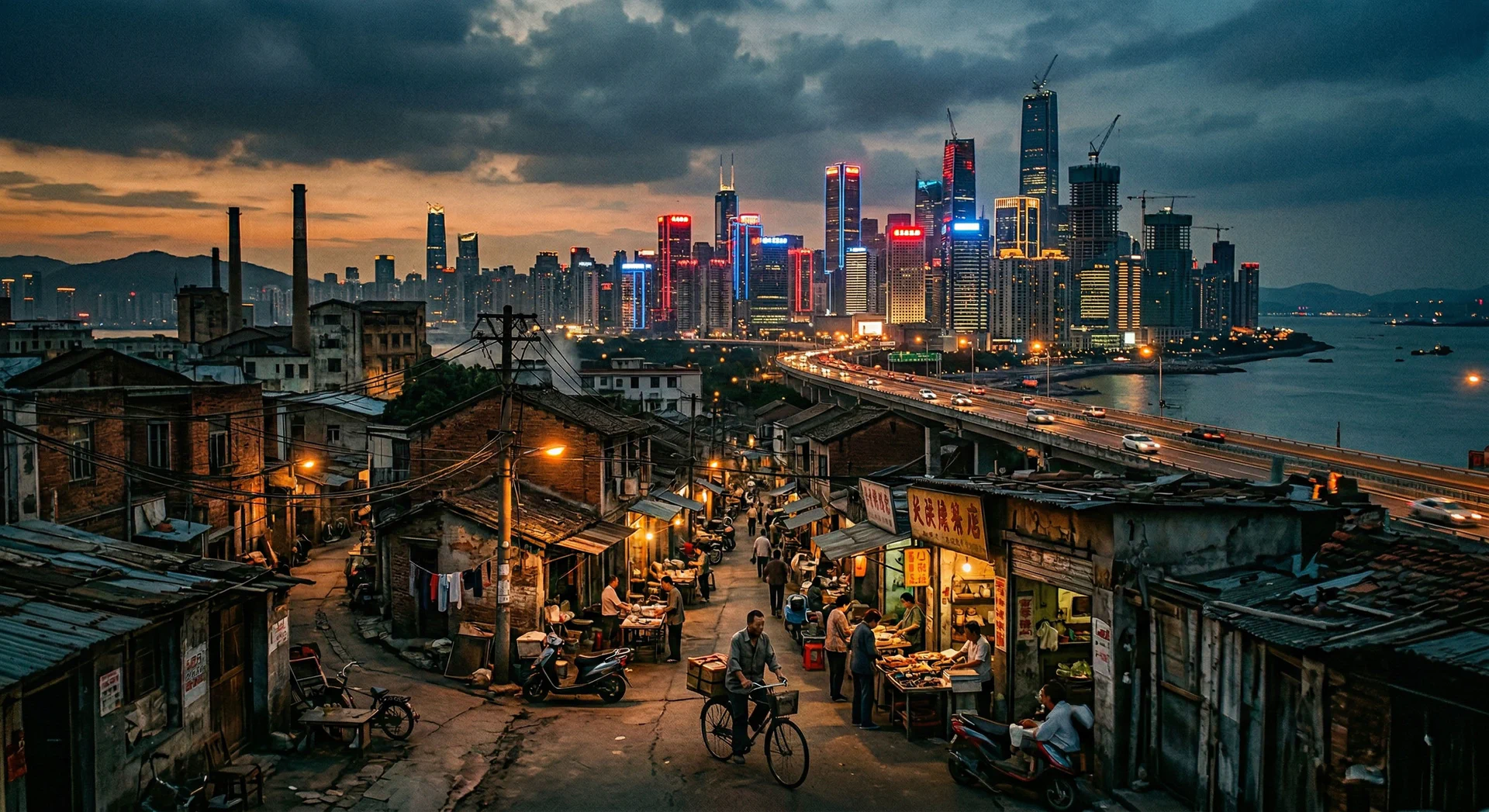
Millennium Cities: Visual Memories of Urban and Rural China
Today, many people look back nostalgically at the early 2000s, recalling a period of rapid economic growth and intense social transformation, when the relationship between urban and rural spaces had not yet been fully reshaped by globalization and modernization. This program seeks to revisit that era through film, presenting complex intersections of individuals, institutions, and spatial change. The nine selected works, produced between the early 2000s and 2011, offer multidimensional perspectives on social observation and narrative practice.
The Transition Period and Good Cats focus on inland cities and county-level power and capital operations, revealing how institutions and economic forces shaped local society. Way of Fortune and Dragon Boat explore industrialization and migration in coastal and Pearl River Delta regions, reflecting the interplay of traditional customs, religious beliefs, and globalization. Transition-Space and Where Should I Go? examine urban-rural fringe areas and second-generation migrants, exposing everyday practices and identity struggles, while Stranger’s Street portrays intimate relationships and survival pressures among mobile populations in Guangzhou’s urban villages. Meanwhile, The Yellow Bank employs fixed-camera, structural, ethnographic observation of urban space and temporal events, and 798 Station documents the transformation of cultural industries and art districts, offering a lens into urban spatial and creative ecology.
Through this program, you will see the fluid boundaries between urban and rural spaces and the complex dynamics of urbanization. You will discover how institutions, the economy, space, and culture intertwine to shape contemporary Chinese cities and countryside. By engaging with these films, you can better understand how these structural changes since the turn of the millennium have affected individual lives, social order, and cultural memory.


